
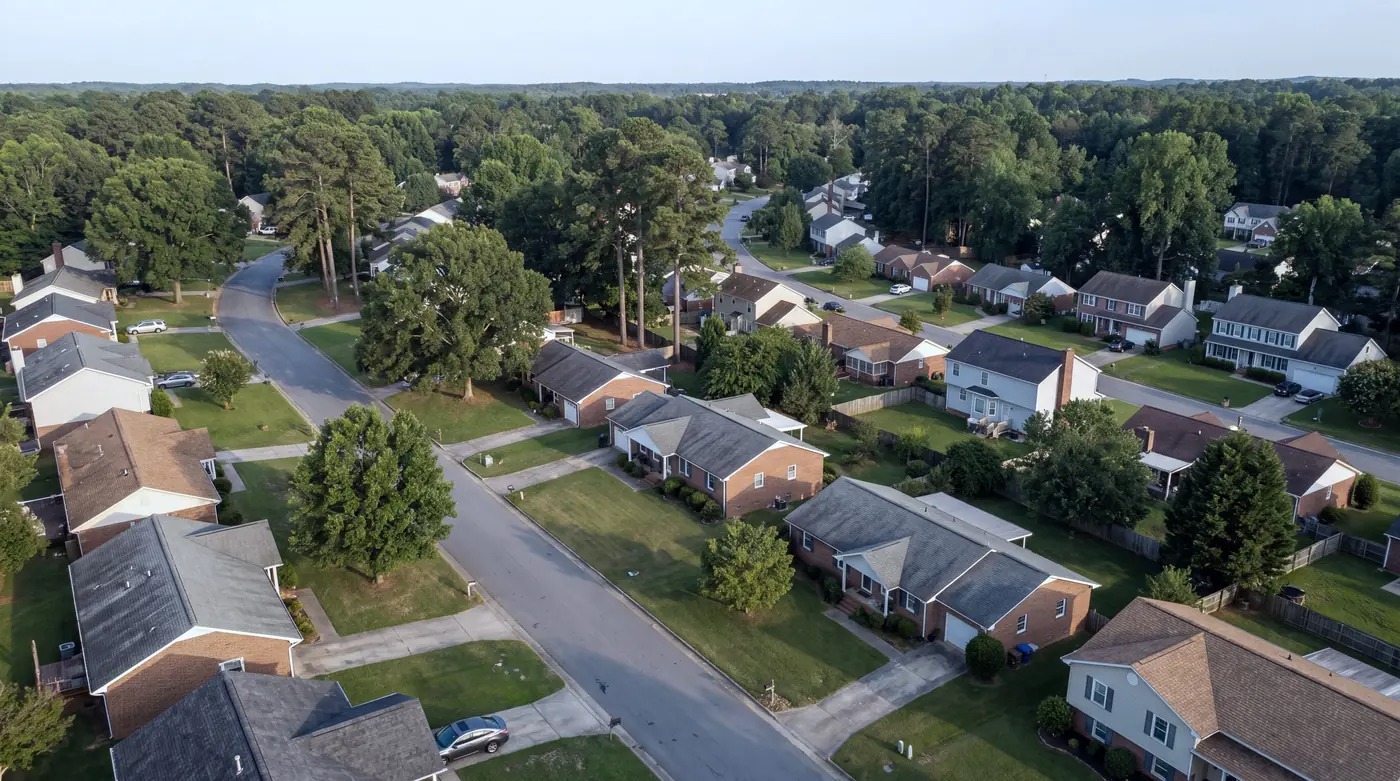
Why rejuvenation makes sense for a commercial property
A commercial roof is a big line on somebody's budget. A replacement usually means finding all of that money at once.
Rejuvenation gives you another option for shingle roofs that are aging but still sound. Here's the business case in plain numbers:
- Cost. A treatment usually runs around 20% of replacement. That's up to 80% less.
- Pricing. We price by roof square footage. The cost follows the size of the roof, not what the building is worth or how many units it holds.
- Life added. Each treatment adds up to about 5 years.
- Repeatable. It can be done again about every 5 years, for up to about 15 extra years total, as long as the roof still qualifies.
- Repairs included. A roof tune-up comes with every treatment.
The product is APEX-1132, a soy-based treatment made to react with dried-out asphalt and slow its aging. It soaks into the shingles. It doesn't sit on top like a coating. Read how it works for the details.
You'll still replace the roof someday. Rejuvenation lets you pick the year.
Which commercial roofs qualify
Many commercial buildings have flat or low-slope roofs, and those aren't a fit. Mixed properties are common too, like a flat main roof with shingled mansards, porches or a shingled clubhouse. In that case, only the asphalt shingle sections can be treated.
Good fit: pitched asphalt shingle roofs on
- Apartment buildings, townhome buildings and condo buildings
- Clubhouses and other community buildings
- Churches and other nonprofit buildings
- Offices, including medical and dental offices
- Retail stores and restaurants with shingle roofs or shingled mansards
- Daycares and senior living buildings
- Multi-building portfolios, with each roof judged on its own
Not a fit
- Flat or low-slope roofs: TPO, EPDM, PVC, modified bitumen or built-up tar and gravel
- Metal roofs
- Tile or slate roofs
- Shingle roofs at the end of their life
- Active leaks from failed decking, or missing shingles
Find your type of property
Each page goes deeper on one kind of property.
For boards and managers of HOAs, condo associations and townhome communities with a reserve fund to protect.
For owners and managers of apartment complexes and other multifamily buildings with shingle roofs.
For offices, medical and dental offices, shops, restaurants and other light commercial buildings.
For churches and other nonprofits weighing the roof against everything else in the budget.
For landlords and managers who look after a spread of rental roofs.
Budgets, reserves and phasing
Roof money is usually planned years ahead. A replacement that shows up early breaks that plan. A treatment can push it back.
Move the replacement out of this year
If the roof qualifies, one treatment can push replacement out by up to about 5 years. Repeat it and the roof can get up to about 15 extra years total. That gives an owner or a board time to build the reserve, instead of borrowing or asking members for a special assessment.
Phase it across buildings and budget years
Each building is its own job with its own price. You don't have to do them all at once.
Here's a made-up example with round numbers, not a real job. Say a community has 12 buildings. The assessment finds 9 that qualify and 3 that are near the end. You could treat 5 this year and 4 next year. The other 3 go on the replacement plan. Now the reserve has to cover 3 new roofs instead of 12 close together.
Roofs keep aging while they wait. So a building held for next year gets checked again before it's treated.
Plan the replacement instead of reacting to it
Once you know which roofs get treated and when, you can see the replacement dates coming. That's a plan you can put in front of an owner or a board. We don't give tax advice, so ask your accountant how to book it.
Rejuvenation vs. replacement on a commercial property
Here's how the two stack up on a building with a sound shingle roof.
| Item | Rejuvenation | Replacement |
|---|---|---|
| Cost basis | Usually around 20% of replacement, priced by roof square footage | The full cost of a new roof |
| Time on site | Hours per roof, not days. Large buildings take longer | Longer, with the old roof torn off first |
| Disruption | Spray work with no tear-off and no dumpster. People stay off the work area until it's dry | Tear-off noise, debris and a dumpster on site |
| Old shingles | Stay on the roof and stay in service | Torn off and hauled away, usually to a landfill |
| Budget timing | Smaller amounts that can be spread across buildings and years | One large bill, often for several buildings close together |
| What you get | Up to about 5 more years per treatment, up to about 15 extra years with repeats | A brand new roof and a fresh start |
How a commercial or multi-building project runs
- 01First call
Call (336) 523-0113 or book a free roof assessment. Tell us how many buildings there are, where they are and what the roofs are made of. If they're all flat or metal, we'll tell you right then.
- 02Property walk and per-building assessment
The owner walks the property himself and checks every building. He looks at the shingles, the granule loss, how well they bend and the flashing. Tell us what your board or owner needs to see, and we'll talk it through at the assessment.
- 03A price for each building
Each roof that qualifies gets its own price, set by its square footage. Roofs that don't qualify go on your replacement list, and you'll hear why.
- 04A phased plan, if you want one
Do every building at once or spread the work out. Buildings can be grouped by condition, by budget year or by what works for the people on site.
- 05Tune-up, then treatment, building by building
Each roof gets its tune-up first: loose shingles secured, flashings resealed and nail pops fixed. Then the treatment is sprayed on, one building at a time.
- 06The re-treat cycle
Each treatment comes with a 5-year transferable warranty, and we give you the written terms before work starts. About every 5 years, each roof gets assessed again and re-treated if it still qualifies.
Little disruption for the people on site
Tenants, residents, customers and congregations don't want a roof job in their way. This one stays out of it.
- No tear-off, so there's no dumpster in the lot and no days of hammering
- The treatment is sprayed on, in hours per roof, not days
- At 70 to 80°F and 50% humidity, it's tack free in about 30 minutes, ready for foot traffic in about 1 hour and fully cured in 1 to 2 hours
- People and pets stay off the work area until it's dry
Large buildings take longer than a house. The schedule comes out of the assessment. Our hours are Monday to Friday 8am to 6pm and Saturday 9am to 3pm. The treatment only goes on in mild, dry weather, so rain can move a date. Give your tenants or members a heads-up, and plan for a backup day.
Safe around people and grounds
APEX-1132 is made from soybean oil. It carries 96% certified biobased content under USDA BioPreferred. It's biodegradable and pH neutral, with no flash point and little to no odor. Delicate plants get covered, and overspray gets rinsed off. More on the soy-based roof treatment.
Less in the landfill
A tear-off strips the old shingles and hauls them away, usually to a landfill. A treatment keeps the roof you already have in service. If your company or board tracks sustainability goals, that's worth writing down.
The data, the tune-up and who you deal with
Boards and owners want numbers they can check. These come from SoyLei's product data sheet for APEX-1132. It compares untreated shingles, a leading competitor's rejuvenator and APEX-1132.
- Granule adhesion: improved 50%, against 17% for the competitor. Granules that stay put help the shingle resist hail damage.
- Flame spread: 15 inches, against 30 for the competitor and 42 untreated. Lower is better.
- Bend test at 55°F: passed. The untreated shingle failed.
- Hail impact: passed. The competitor failed.
- Sun bleaching: a long-lasting improvement, where the competitor's was short-term.
The full table is on the lab results page.
The tune-up comes with it
Before any treatment, the roof gets a tune-up. Loose shingles get secured, flashings get resealed and nail pops get fixed. On a big property, that means small problems get handled before they turn into work orders.
Insurance
Carriers in North Carolina look hard at aging roofs at renewal. A documented tune-up and treatment can help an older roof get through an inspection. Nobody can promise what a carrier will do, so ask your agent what they want to see. There's more on aging roofs and insurance.
One person from start to finish
The owner answers the phone and does every assessment himself. He walks every building. Roof Armor is BBB A+ rated and fully insured. If a roof isn't worth treating, he'll tell you, even when that makes the job smaller.
Common questions
Does roof rejuvenation work on commercial roofs?
Yes, if the roof is pitched asphalt shingle. Plenty of apartment buildings, condo buildings, offices, churches and shops have one. It won't work on flat membrane, built-up or metal roofs. The free roof assessment shows which roofs on your property qualify.
Can you rejuvenate a flat commercial roof?
No. APEX-1132 is made for asphalt shingles only. TPO, EPDM, PVC, modified bitumen and built-up tar and gravel roofs aren't candidates, and neither is metal. If your building has a flat main roof with shingled mansards or porches, we can look at the shingled parts.
How large a commercial property can you take on?
We take it one building at a time. The owner walks the property, assesses each roof and prices each one by square footage. Then we set a schedule, all at once or phased. Large buildings take longer than a house, so the timeline comes out of the assessment. We work within roughly 40 miles of Asheboro. See the service areas.
How does roof rejuvenation fit into a capital budget or reserve plan?
A treatment usually costs around 20% of replacement and adds up to about 5 years each time. That can move a replacement out of this year's budget and let you spread work across buildings and years. How to book it is a question for your accountant. Compare both options on the rejuvenation vs. replacement page.
Do tenants or residents have to leave during roof rejuvenation?
No. It's exterior work with no tear-off, and the product has little to no odor. Keep nearby windows closed while we spray. People and pets stay off the work area until it's dry, which takes about 1 hour at 70 to 80°F and 50% humidity. Give everyone a heads-up on the date, since rain can move it.